

Extreme temperatures, recent warming and seasonal influenza-linking human exposures to respiratory health in southern Germany
Climate change is increasing the frequency and intensity of extreme weather events, and both unusually high and unusually low temperatures can have significant effects on human health. These impacts are particularly evident in respiratory conditions. In the study “Extreme temperatures, recent warming and seasonal influenza-linking human exposures to respiratory health in southern Germany” researchers from the Institute of Environmental Medicine and Integrative Health, examined how periods of extreme heat and cold influence the occurrence of respiratory illnesses in southern Germany over a 14-year period (2006 -2019). The research combines detailed medical records with meteorological data to better understand how environmental conditions affect the human respiratory system.
The study analysed daily hospital admissions and outpatient visits from the emergency department of the University Hospital Augsburg, including cases such as asthma, bronchitis, and other breathing disorders. These health data were linked with local weather information, particularly temperature and humidity, as well as influenza surveillance records. To explore the complex relationship between weather and health outcomes, the researchers applied advanced statistical techniques known as distributed lag non-linear models. These models enable the detection of delayed and non-linear responses to environmental exposures, meaning that the health effects of a temperature event may appear several days or even weeks after the initial exposure rather than immediately.
?
Key Findings
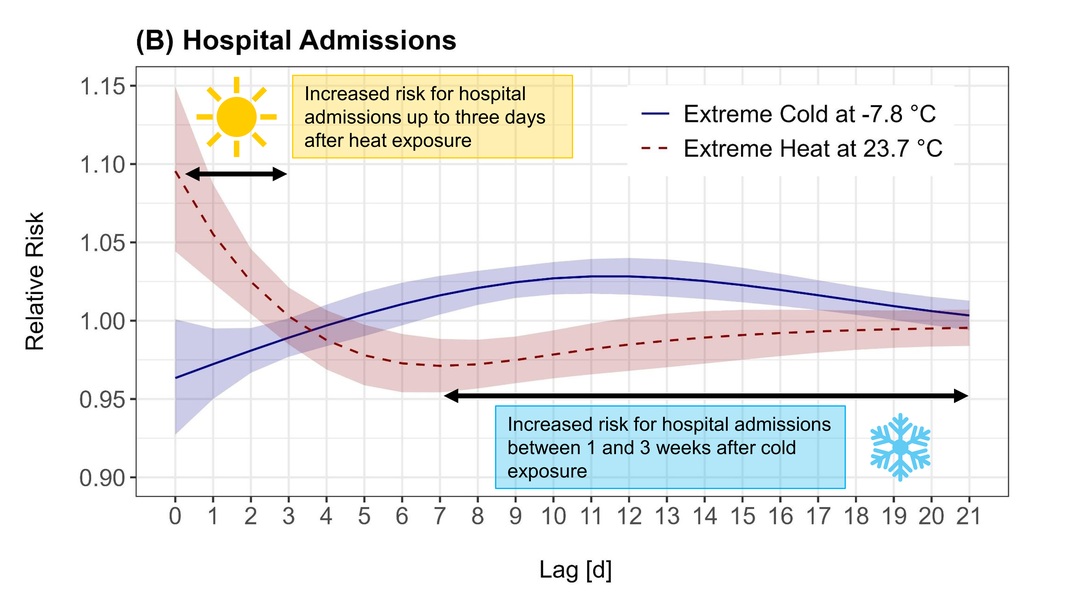
- Heat increases respiratory stress quickly: Days with unusually high temperatures were associated with an increase in respiratory cases in the days immediately following the heat exposure. This indicates that heat can rapidly trigger or worsen breathing difficulties, especially in vulnerable populations such as the elderly and those with chronic respiratory conditions.
- Cold has longer-lasting health effects: Extreme cold did not show a strong immediate effect but was linked to elevated respiratory health issues over a longer period, extending up to about three weeks. This suggests that cold exposures may contribute to sustained stress on the respiratory system, possibly by weakening the body’s defences or interacting with other seasonal factors.
- Influenza is an important factor: The analysis showed that seasonal influenza outbreaks overlap with cold seasons and add substantially to the burden of respiratory illnesses. Accounting for influenza was essential to accurately estimate how much of the change in respiratory cases was due to weather alone versus combined effects of flu and temperature.
- Climate warming may amplify heat effects: By comparing earlier and later years within the study period, the researchers found that the impact of heat on respiratory hospital admissions increased over time. This suggests that as average temperatures rise with climate change, the health impacts of heat exposure may grow stronger.
These findings show that both high and low temperatures can influence respiratory health in measurable ways. Heat appears to act quickly, while cold has a slower, more prolonged effect. Seasonal influenza further complicates the picture by adding to respiratory disease burdens, especially in colder months.
?
?
Why it matters
?
?