

Vortragsreihe Medical Information Sciences
Allgemeine Informationen zur Vortragsreihe
?
?
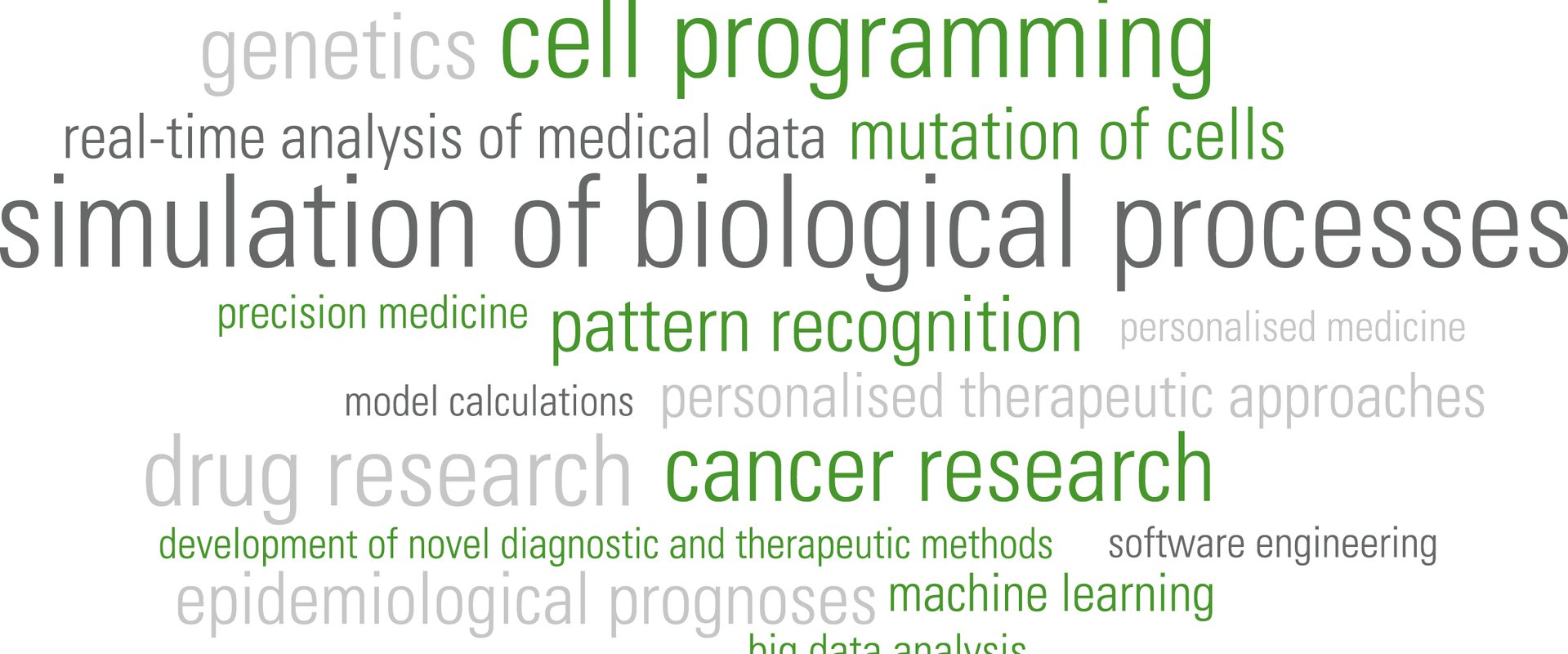
Die Zukunft der medizinischen Forschung und Versorgung ist personalisiert, digitalisiert und datengetrieben. Bereitstellung, Analyse und Interpretation dieser Daten sind auf disziplinübergreifende Kooperationen angewiesen. Auf diese Weise entstehen an der Schnittstelle von Medizin und Informatik die Grundlagen für medizinischen Fortschritt.
Eine Reaktion auf diese Entwicklung ist der sukzessive Auf- und Ausbau des Forschungs- und Studienschwerpunktes Medical Information Sciences am Standort Augsburg. Im
Wintersemester 2022/2023 fand erstmalig eine gleichnamige Vortragsreihe statt, die aktuelle Fragestellungen aus der Wissenschaft thematisiert und Einblicke in entsprechende Forschungsbereiche und Anwendungsgebiete gibt.
?
?
Die Veranstaltungen der Vortragsreihe Medical Information Sciences finden im aktuellen Sommersemester immer donnerstags um 16:00 Uhr an der Fakult?t für Angewandte Informatik in H?rsaal N2045?statt.
?
Einen?elektronischen Kalender zur MIS-Vortragsreihe?finden Sie unter folgendem Link: https://bioinf-nextcloud.informatik.uni-augsburg.de/apps/calendar/p/ppNc2sNPDMFBGKoG. (?ber die drei Punkte rechts neben dem Kalendernamen auf der linken Seite gelangen Sie zum Link für das Abonnement des Kalenders.)
?
Die Veranstaltungen werden au?erdem bei Bedarf per Zoom-Livestream?übertragen. Wir bitten bei Interesse an einer Teilnahme am Livestream um eine kurze pers?nliche Anmeldung per E-Mail via?office.bioinf@informatik.uni-augsburg.de.
?
N?here Informationen zu den Referentinnen und Referenten sowie zu deren Votr?gen erhalten Sie rechtzeitig an dieser Stelle sowie regelm??ig über den offiziellen MIS-Newsletter, für den Sie sich ganz unten auf dieser Seite registrieren k?nnen.
?
Die Vortr?ge richten sich an ein interessiertes Fachpublikum. Vortragssprache ist Englisch.
?
?
Im Vorlauf der Vortr?ge wird zudem die M?glichkeit zur Wahrnehmung einer pers?nlichen Sprechstunde mit der oder dem Vortragenden des? jeweiligen Tages angeboten, um sich bspw. über wissenschaftliche Fragestellungen, Forschungsthemen oder Kooperationsm?glichkeiten auszutauschen. Bei Interesse bitten wir Sie, sich rechtzeitig über eine Nachricht an?office.bioinf@informatik.uni-augsburg.de für einen Sprechstundentermin anzumelden.
?
Im Folgenden finden Sie den Ablaufplan für das Sommersemester 2026?mit weiterführenden Informationen zu den einzelnen Vortr?gen:
?
?
ABLAUFPLAN für das Sommersemester 2026
Veranstaltungsort: H?rsaal N2045 (Fakult?t für Angewandte Informatik)
?
Abstract
Mechanistic modeling provides a quantitative framework to connect molecular properties, ocular physiology, and clinical outcomes. The eye represents a uniquely accessible system in which key processes - such as diffusion, anatomical barriers, and fluid turnover - can be integrated into ODE-based models to describe drug distribution and elimination. These principles explain central observations such as ocular half-life and its translation across species, by linking molecular size and eye geometry to pharmacokinetics.
A major opportunity arises from combining such models with increasingly rich longitudinal data of drug effect. High-frequency measurements from emerging technologies such as home optical coherence tomography (OCT) capture disease dynamics at an unprecedented temporal resolution. Integrating these data with pharmacokinetic/pharmacodynamic (PK/PD) models enables a more precise characterization of treatment response and has been shown to improve the efficiency of clinical studies by reducing required sample sizes while maintaining statistical power.
Together, these approaches illustrate how mechanistic understanding can be translated into predictive capability - making it possible to infer otherwise inaccessible processes within the eye and to guide therapeutic development. At the same time, important open questions remain, including a deeper understanding of tissue-level distribution and variability in response, offering opportunities for collaborative research at the interface of modeling, data science, and experimental biology.
?
Referent:?
?
Kurzbiographie
Dr. Bernhard Steiert is Head of Clinical Pharmacometrics at Roche Pharma Research and Early Development (pRED), Pharmaceutical Sciences, at the Roche Innovation Center Basel, Switzerland. He leads a team of pharmacometricians across therapeutic areas, focusing on the application of modeling and simulation to inform drug development and decision-making.
He obtained his PhD in theoretical physics from the University of Freiburg in 2017, working on modeling and simulation of biological processes. He joined Roche that same year and has since contributed to projects in the preclinical and clinical space in several disease areas, and particularly within ophthalmology. In this context, he also serves as Clinical Pharmacologist, supporting dose selection and development strategy.
His work centers on mechanistic and data-driven approaches, including ODE-based modeling, digital biomarkers, and innovative study designs. He has pioneered the use of high-frequency patient data, such as home OCT, and to the development of novel modeling concepts for clinical decision-making. His interests further include AI-based methods, such as neural ODEs, and questions of model identifiability.
Dr. Steiert collaborates with academic partners and has supervised students and early-career researchers at the interface of biology and modeling.
Veranstaltungsort: H?rsaal N2045 (Fakult?t für Angewandte Informatik)
?
Abstract
Dystonia comprises complex motor network disorders characterized by involuntary abnormal postures and aberrant movement patterns that, to date, can only be quantified objectively to a limited extent. I here present a translational approach that links preclinical dystonia rodent models and patients with dystonia through shared kinematic signatures. The starting point is the DYT-TOR1A rat model, in which movement-dependent dystonic patterns are induced by repeated overuse of the forepaw and by peripheral nerve injury using a nerve crush paradigm. These movements are quantified using AI-based computer vision and time-resolved motion analysis to define characteristic kinematic profiles of dystonic movements in the animal model.
In a second step, I investigated to what extent these kinematic features can also be identified in humans. To this end, patients with cervical and other forms of dystonia were analyzed using comparable computer-vision tools applied to standardized video recordings. This enabled a data-driven characterization of dystonia subtypes, an objective assessment of treatment effects, for example under botulinum toxin therapy or deep brain stimulation, and a systematic search for structural similarities in movement kinematics between animals and humans. Overall, i here illustrate how kinematic signatures derived from overuse and nerve injury models can be translated into an AI-based translational framework that may provide new biomarkers for subtype classification, treatment monitoring, and, in the longer term, disease-modifying interventions in dystonia.?
?
Referent:? Prof. Dr. Chi Wang Ip
?
Kurzbiographie
Prof. Dr. Chi Wang Ip is neurologist and translational neuroscientist with a strong clinical and experimental focus on neurodegenerative and hyperkinetic movement disorders, particularly Parkinson’s disease and dystonia. His research adopts a rigorous translational approach, integrating pathophysiologically relevant animal models with neuroimmunology, multimodal biomarkers, neuromodulation, molecular imaging, and AI-assisted kinematic phenotyping. The overarching aim is to develop innovative diagnostic, symptomatic, disease-modifying, and preventive therapeutic strategies along the full translational continuum—from molecular mechanisms to patient care.
?
Since 2025,?Prof. Dr. Chi Wang Ip?has served as W2 Professor of Translational Neurology with a focus on neurodegenerative diseases at the University Hospital Würzburg. He has been Deputy Director of the Department of Neurology at the University Hospital Würzburg since 2022 and he has held the position of Senior Consultant Neurologist since 2020. He is a board-certified neurologist since 2010 and has led the Movement Disorders and Botulinum Toxin Clinic since 2010.
?
?
Veranstaltungsort: H?rsaal N2045 (Fakult?t für Angewandte Informatik)
?
Abstract
Ultrasound is safe, real-time, portable, and inexpensive, yet its clinical use remains heavily constrained by operator dependence. High-quality scans require substantial expertise, and trained sonographers or radiologists are not always available across hospitals, outpatient settings, or underserved regions. This talk presents a research vision for democratizing ultrasound imaging through robotics and artificial intelligence.
The presentation will outline intelligent ultrasound systems that can understand the imaging task, guide or automate scan acquisition, assess image quality, estimate anatomical coverage, flag uncertainty or suspicious findings, and support expert review when necessary. This shifts ultrasound from a purely expert-driven procedure toward a scalable workflow in which robotic platforms, AI-based perception, and decision-making modules assist acquisition, while clinicians remain responsible for final validation and diagnosis.
The talk will further discuss key methodological components underlying this vision, including ultrasound image understanding, quality assessment, anatomical completion, robot-assisted scanning, high-level orchestration with foundation models, learning-based scan policies, trustworthy human–AI interaction, and neural rendering methods such as Ultra-NeRF for retrospective virtual re-scanning. Together, these directions aim to make ultrasound imaging more accessible, reproducible, and clinically useful at scale.
?
Referent:? Dr. Mohammad Farid Azampour
?
Kurzbiographie
Mohammad Farid Azampour is a Postdoctoral Researcher at the Chair for Computer Aided Medical Procedures (CAMP) at the Technical University of Munich, where he works with Nassir Navab on medical image analysis, ultrasound imaging, robotics, and physics-based deep learning. At CAMP, he leads the Ultrasound Image Analysis Group and co-leads the Robotic Ultrasound team. His research focuses on making ultrasound more intelligent, accessible, and autonomous through methods for image understanding, anatomical reconstruction, neural rendering, and robot-assisted scanning. His recent work spans ultrasound simulation, CT–ultrasound and MR–ultrasound registration, shape completion from sparse ultrasound, and autonomous robotic navigation. In addition to his research, he is active in teaching, mentoring, and scientific service within the medical imaging, computer vision, and robotics communities.
Veranstaltungsort: H?rsaal N2045 (Fakult?t für Angewandte Informatik)
?
Abstract
Biotechnology and drug research are facing increasingly complex challenges: diseases are becoming more individualized, drug development remains costly and slow, and the demand for sustainable solutions in medicine continues to grow. Generating new insights in this environment requires more than just data — it requires intelligent integration and interpretation. This talk presents a systematic AI-driven approach to understanding biological systems, based on a globally unique, deeply curated dataset that combines biological sequence data with rich semantic knowledge about entities and their relationships. By integrating large language models, knowledge graphs, and multi-modal data, we enable AI systems to uncover hidden biological patterns and generate actionable insights — often without extensive wet-lab experimentation. The lecture demonstrates how such data can be transformed into practical, explainable applications: from advanced sequence analysis and automated biomarker discovery to precise prediction of biological interactions and AI-supported drug repurposing and repositioning. The result is a new generation of AI tools that accelerates discovery, reduces costs, and supports more sustainable and personalized innovation in the life sciences.
?
Referent:? Prof. Dr. Prof. h.c. Andreas Dengel
?
Kurzbiographie
Andreas Dengel is a professor at the Department of Computer Science at the RPTU University of Kaiserslautern-Landau, an Executive Director of the German Research Center for Artificial Intelligence (DFKI) in Kaiserslautern, and head of the Smart Data & Knowledge Services research department at DFKI. Since 2009, he has also held a professorship (kyakuin) at the Department of Computer Science and Intelligent Systems at Osaka Metropolitan University. He has received many awards for his work and scientific achievements. In 2019, for example, he was selected by a jury on behalf of the German Federal Ministry of Education and Research (BMBF) as one of the most influential scientists in 50 years of AI history in Germany for his research in the field of document analysis. He is the recipient of the Order of Merit of Rhineland-Palatinate and was awarded the “Order of the Rising Sun, Gold Star” in 2021, Japan's oldest order, on behalf of His Majesty Emperor Naruhito. His recent research focuses on a wide-spectrum neuro-symbolic AI problems (https://scholar.google.de/citations?hl=de&user=p3YP0DMAAAAJ&view_op=list_works&sortby=pubdate)
?
Veranstaltungsort: H?rsaal N2045 (Fakult?t für Angewandte Informatik)
?
Abstract
?
?
Referent:?
?
Kurzbiographie
?
?
Veranstaltungsort: H?rsaal N2045 (Fakult?t für Angewandte Informatik)
?
Abstract
?
?
Referent:?
?
Kurzbiographie
?
?
Veranstaltungsort: H?rsaal N2045 (Fakult?t für Angewandte Informatik)
?
Abstract
Despite impressive performance in publications, many AI models fail when deployed in real-world settings. One important reason is poor or misleading validation. This talk explores common pitfalls in validating AI systems, especially the misuse of performance metrics, and shows how they can create false confidence. Practical recommendations will be offered to guide more robust and trustworthy validation practices, aimed at supporting the safe and effective integration of AI into real-world workflows.
?
Referent:?
?
Kurzbiographie
Dr. Annika Reinke is Deputy Head of Department of the Intelligent Medical Systems Division at the German Cancer Research Center (DKFZ), where she leads the Validation of Intelligent Systems group. Her research focuses on identifying and eliminating fundamental flaws in the validation of biomedical image analysis algorithms. Through her work, Dr. Reinke addresses societally and clinically relevant challenges in medical AI, aiming to improve the robustness, comparability, and real-world relevance of validation pipelines. She plays a leading role in the international community, serving as Secretary of the MICCAI Special Interest Group on Biomedical Challenges and as Chair of the MONAI Working Group on Evaluation and Benchmarking, among others. Her contributions have been recognized with several prestigious awards, including the Hector Foundation Award and the Richtzenhain Doctoral Prize.
Veranstaltungsort: H?rsaal N2045 (Fakult?t für Angewandte Informatik)
?
Abstract
?
?
Referent:? PD Dr. Matthias Grothe
?
Kurzbiographie
?
Veranstaltungsort: H?rsaal N2045 (Fakult?t für Angewandte Informatik)
?
Abstract
?
?
Referent:? Prof. Dr. Bj?rn Schuller
?
Kurzbiographie
?
Veranstaltungsort: H?rsaal N2045 (Fakult?t für Angewandte Informatik)
?
Abstract
?
?
Referent:?
?
Kurzbiographie
?
Veranstaltungsort: H?rsaal N2045 (Fakult?t für Angewandte Informatik)
?
Abstract
?
?
Referent:? Dr.-Ing. Miriam Goldammer
?
Kurzbiographie
?
Abonnement des MIS-Newsletters
Wir freuen uns über Ihr Interesse am Forschungs- und Studienschwerpunkt Medical Information Sciences!
?ber das folgende Anmeldeformular k?nnen Sie den regelm??igen Erhalt von aktuellen Informationen sowie Hinweisen zu Veranstaltungen mit Bezug zum Schwerpunkt MIS anfordern.
?
?
Anmeldeformular
?
?
Datenschutzhinweis
?
Mit dem Abonnement unserer Medien stimmen Sie sowohl der Verarbeitung Ihrer Daten für den Versand der ausgew?hlten Medien als auch den?Datenschutzrichtlinien der Universit?t Augsburg?zu. Die erhobenen Daten dienen ausschlie?lich dem Versand der von Ihnen ausgew?hlten Medien und der Dokumentation Ihrer diesbezüglichen Zustimmung. Es erfolgt keine anderweitige Verarbeitung und keine Weitergabe der Daten an Dritte.
?
Sie k?nnen Ihr Abonnement und die Einwilligung zur Speicherung Ihrer Daten jederzeit ohne Angabe von Gründen widerrufen. Bitte schicken Sie hierzu eine formlose E-Mail an? office.bioinf@informatik.uni-augsburg.de.