

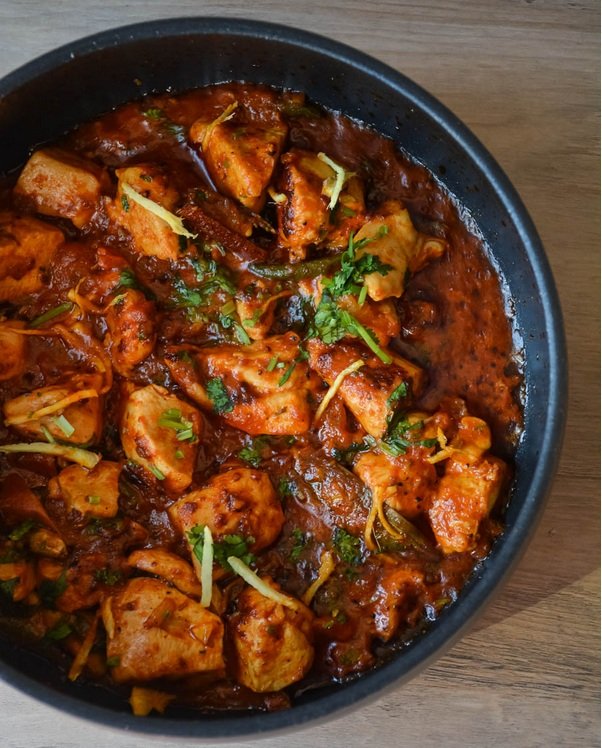
Chicken Karahi
Ingredients:
?
- Chicken (1 kg)
- Tomatoes (6)
- Onions (2)
- Ginger garlic paste (2 Tbsp)
- Green chili peppers (4)
- Oil (125 ml)
- Salt (1.5 tsp)
- Cumin seeds (1 tsp)
- fresh ginger for garnish (2.5 cm)
- fresh coriander (a handful)
- Yogurt whisked (125 gr)?
- Chicken karahi masala (spice mix)
? Chicken Karahi is eaten with rice or naan bread. Something similar to naan is sold at Lidl in the bakery section. It's called “Mini-Fladenbrot”.?
??You can find the chicken karahi masala-spice mix (and all the other ingredients) at “Punjab Asiashop” near the main train station. Waseem and Insha recommend the brands “Shan” or “National”!
?
?
?
Recipe
?
- Heat 125 ml oil in a large pan over medium heat. Add 1 teaspoon cumin seeds and let them crack for about 30 seconds. Add 2 small chopped onions and cook until lightly golden.
- Add 2 tablespoons ginger–garlic paste and stir for 1 minute until the raw smell disappears. Add 1 kg chicken pieces and cook over medium-high heat for 8–12 minutes, until the chicken turns white and releases its moisture.
- Add 1? teaspoons salt as well as the chicken karahi masala. (Instead of the spice mix you can also simply add 1? teaspoons red chilli powder, ? teaspoon black pepper, and 1 teaspoon coriander powder.) Mix well and fry for 2 minutes so the spices coat the chicken.
- Add 6 sliced tomatoes and 4 whole green chillies. Cover and cook over medium heat for 15–20 minutes, until the tomatoes soften.
- Remove the lid and gently mash the tomatoes with a spoon. Cook over medium-high heat, stirring often, until the gravy thickens and the oil begins to separate, about 8–10 minutes. Adjust salt and chilli to taste.
- Add yogurt, mix well and cook until oil separates.
- Once the oil separates and the gravy is thick and glossy, turn off the heat. Garnish with sliced fresh ginger and chopped coriander.?
- Serve hot with naan bread or boiled rice.?
Meet the persons behind the recipe
Meet Insha and Waseem!?
The recipe for Fereni was given to us by Insha and Waseem. For each recipe in our collection, we talk to international students. Here's what Insha and Waseem told us about Pakistani cuisine:?
?
Your Cultural Night is coming up soon! Are you excited?
W: Yes, we are! We both feel that Pakistani culture has not been represented in Augsburg before. That’s why this event is important to us.
How do you personally feel about cooking?
I: I really like to cook!
W: I don’t like it that much, but I had to learn it when I came to Augsburg. Fortunately, it's easy to learn how to cook Pakistani food.
I: And many dishes can even be cooked in a dormitory kitchen. One example is my favorite dish, chicken karahi, which we would like to share with you here. It is in general a very popular dish in Pakistan.
?
Can you tell us more about the food culture in Pakistan?
I: Food plays a central role in Pakistani culture—it is more than a necessity, it’s an experience! At events like weddings, hundreds of guests are served a variety of dishes in large pots called “daig” and the smell of food fills the air.
W: Hospitality is generally an important value in Pakistani culture. When I came to Germany, it was a culture shock—especially the idea of splitting the bill. In Pakistan, people don’t split bills and don’t let guests or foreigners pay. Another big difference: in Germany it’s hard to find food after 11 p.m. when you’re out and about in the city. In Pakistan you can still get full meals and street food even late at night.
Hopefully we can give you a taste of Pakistani hospitality at our Cultural Night!?
?
??Waseem sent us this short video?to sum up his culinary culture shock.
?
?
Some more inspiration:
Popular Dishes:
?
Pakora is a dish that is highly romanticized in Pakistan. It is prepared especially when it rains.
→ Mix sliced onions, thin potato slices and chopped spinach. Add gram flour, salt and red chilli. Add a little water to make a thick batter. Heat oil. Drop small spoonfuls. Fry until golden.
?
Gajar Ka Halwa is a dessert made out of carrots. It is a popular winter dish in Pakistan.
?
Lassi is made by blending yogurt with cold water until smooth and frothy. There is an ongoing cul-tural debate about whether lassi should be sweet or salty. For instance, Insha prefers salty lassi, while Waseem prefers it sweet. It’s your choice! Add sugar for sweet lassi or salt for salty lassi.
?
Rooh Afza is a syrup-based drink enjoyed cold with water and ice or warm with milk. The red rose flavor is more popular than the green pistachio, and when mixed with water, ice, and watermelon, it is known as the drink of love.
Pakistani cuisine online:
A good source is?
?Food Fusion“ on YouTube. Insha has already learned many good recipes there!?
?
?
Restaurants:
There are no Pakistani restaurants in Augsburg, but Insha and Waseem recommend Indian restaurants as a good alternative due to their culinary similarities. One example is Dessi Tadka in the city center, which offers student discounts Tuesdays and serves various versions of karahi. In a restaurant the dish will taste different than when cooked in a dorm room, as the karahi pot (which gives the dish its name) adds a distinctive smoky flavor. While the dish is less authentic—sweeter and only “German spicy”—Insha and Waseem still enjoy eating there!
??????, Insha and Waseem!