拉斯维加斯赌城

图片

Why Economics?

Step into a Master’s program in Economics that empowers you to shape the future.

In our Master's program, you’ll thrive in an inspiring environment where you gain the analytical and empirical tools to understand and address the world’s most pressing challenges.

  • How can we balance ambitious climate goals with sustainable economic growth?
  • How do global shocks – from inflation surges to supply chain disruptions – shape the stability and resilience of entire economies?
  • How can social security systems remain fair and resilient for generations to come?

In our MSc program you dive deep into these and other vital questions, and develop the expertise to answer them with clarity and confidence. You will learn to think critically, shape effective strategies, and design evidence-based solutions that truly make a difference.

Whether you aspire to lead in business, drive innovation in public institutions, or continue your academic journey, our Master’s program gives you the knowledge, vision, and strategic mindset to excel. Join us, become part of our vibrant academic community and start shaping the future with your ideas.

Why Economics in Augsburg?
Course

Attractive and Flexible Course Choices

choose from a wide range of economics courses which can also be complemented by modules in business, statistics, and programming
Individualized Support

Individualized Academic Support

personalized guidance and free topic selection for term papers and master's theses
Admission in Spring or Autumn

Flexible Admission

You are free to start in either the summer or winter term.

The application windows are 10 September to 15 December for the summer term and?10 March to 15 June for the winter term.

Networking with Academics and Practitioners

Networking with Academics and Practitioners

engage with academics, policy makers and business leaders at various networking events like the Economics Get-Together and the Economics?Stammtisch

DETAILS AND DOWNLOADS

About the degree programme
Degree programme: Economics
Official Designation: Economics
Degree: Master of Science (M.Sc.)
Study mode: Full-time
Language of instruction: English (German-language modules also available)
Start of studies: winter semester, summer semester
Standard study duration: 4 semesters
Admission type: Open admission (with an aptitude assessment process)
Minimum German language skills: A 2 AND
Minimum foreign language skills: English B 2
Please note: Admission requirements according to § 4 of the exam regulations. Introductory events take place closely before the start of the lecture period: https://www.uni-aug…. Start of the lecture period: https://www.uni-aug…
Application deadline for the summer semester: 15. December
Application deadline for the winter semester: 15. June
Florian Diekert
Our Master perfectly prepares our prospective economists both for an academic career as well as for management positions in companies, associations or government agencies.

Prof. Dr. Florian Diekert, Head of the Master's Program

Tamia Choroba
The Master combines analytical depth with strong societal relevance. It allows me to analyze economic processes based on evidence, critically assess complex economic relationships, and develop sustainable solutions to current economic policy challenges.

Student of our Master's Program

Noah Pongratz
I particularly value the wide range of courses, which allows me to set my own academic focus and choose the topics that interest me most. Additionally, most classes are pleasantly small, creating an environment where meaningful interaction and close exchange with the lecturers naturally develop.

Student of our Master's Program

Nadine Schubmann
My studies combined economics and politics from multiple perspectives, providing a solid foundation for real-world work. I particularly valued the focus on mathematics and modeling, as well as the critical evaluation of models against reality. Today, I apply this mix of analytical thinking and practical insight in my role in marketing and sales at Makandra, a software development firm located in Augsburg.

Nadine Schubmann, Graduate of our Master's program

Philipp Sippel
What I really appreciate about the master’s programme is the hands-on work with real-world datasets and the chance to engage in genuine scientific research in our experimental labs. It not only helps me connect the theory from my courses to real applications but also prepares me excellently for an academic career.

Student of our Master’s Program

Johannes Ziegler
The Master offers small class sizes, fostering interaction and a collegial atmosphere. Regular events such as lectures, receptions, and informal meetups provide great opportunities to connect with peers and professors. The program’s flexible electives allow for a personalized focus, perfectly preparing students for their careers.

Dr. Johannes Ziegler, Graduate of our Master's and PhD program

Portrait Kai Fischer
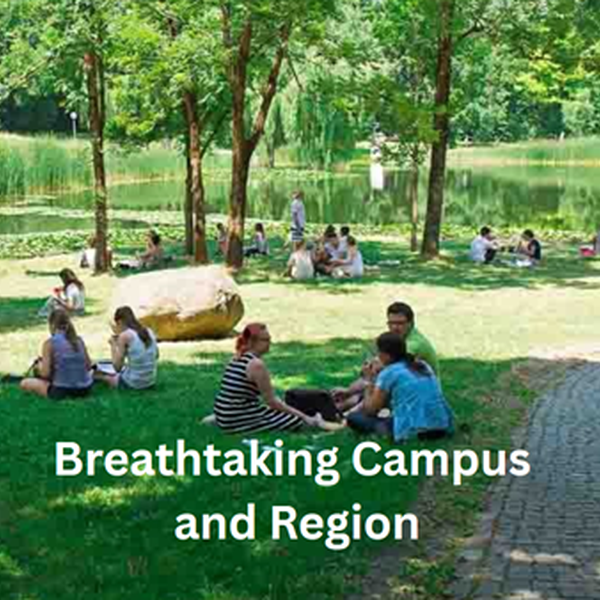
I really like how approachable and supportive the academic staff is. They create such a motivating and enjoyable study environment. Combined with the beautiful campus, which encourages spending more time with friends, it truly feels like the perfect place to study.

Student of our Master's Program

Program structure

  • Duration: 4 terms (120 ECTS)
  • Compulsory Courses: 3 out of 3?modules?with a total of 18 credit points (ECTS)
  • Core Electives: 7 elective economics modules with a total of 42 credit points (ECTS)
  • Free Electives: 5?elective courses out of a broad range of economics and business modules with a total of 30 credit points (ECTS)
  • Final Module: Master's thesis?with individual topic selection,?30 credit points (ECTS)
?

Compulsory Courses (take 3 out of 3 modules)

Offered every winter term (6 ECTS)

?

Data-Driven Econometrics: Theory, Estimation & Application

  • Build econometric models to analyze economic and financial data

  • Apply advanced techniques to solve data-driven problems in hands-on empirical exercises

  • Understand the theoretical foundations behind econometric analysis

?

This module is offered by the Chair of Prof. Yarema?Okhrin. Further information here.

Offered every winter term (6 ECTS)

?

Master Modern Macroeconomics: Theory, Simulation & Policy Impact

  • Build macroeconomic models to analyze economic policies
  • Simulate economies in hands-on computer sessions
  • Evaluate real-world policy debates with expert insights
?
This module is offered by the Chair of Prof. Christoph G?rtz. Further information here.

Offered every summer term (6 ECTS)

?

Microeconomic Theory: Models, Markets & Decision Making

  • Build microeconomic models to analyse consumer and producer behavior
  • Examine market efficiency
  • Explore decision making under risk and uncertainty
?
This module is offered by the Chair of Prof. Kerstin Roeder. Further information here.

?

Core Electives?(choose 7 modules)

Offered every summer term (6 ECTS)

?

Understand and evaluate competition policy decisions

  • Analyse corporate strategies to restrict competition
  • Familiarize yourself with the essential norms of the German and European competition law
  • Apply your knowledge in concrete case studies and evaluate measures introduced by the competition authorities
?
This module is offered by the Chair of Prof. Peter Welzel. Further information here.

Offered every summer term (6 ECTS)

?

Master Empirical Macroeconomics: Data, Methods & Applications

  • Learn the theory and implementation of Vector Autoregressions (VARs)
  • Handle and process macroeconomic time series data in practical sessions
  • Apply empirical methods to analyze real-world economic dynamics

?

This module is offered by the Chair of Prof. Christoph G?rtz. Further information here.

Offered every summer term (6 ECTS)?

?

Public Finances and Population Aging: Key Future Challenges

  • Analyze public pension systems and debt finance with a focus on intergenerational dynamics
  • Develop hands-on experience in MATLAB programming to simulate pension policies

  • Evaluate the impact of aging populations on pension sustainability, debt dynamics and policy response

?

This module is offered by the Chair of Prof. Burkhard Heer. Further information here.

Offered every summer term (6 ECTS)

?

The Sustainability Question: Resource Use as a Challenge of our Time

  • Develop and analyze economic models that describe tradeoffs between conservation and consumption
  • Read and critically analyze scientific articles on recent advances in resource and climate economics

  • Evaluate real-world policy debates with expert insights
?
This module is offered by the Chair of Prof. Florian Diekert. Further information here.

Offered every summer term (6 ECTS)

?

Environmental Protection and the Economy: Market Failures and Policy Solutions

  • Understand the interactions between the economy and the environment
  • Develop skills in economic modelling concerning environmental issues
  • Analyze environmental policies by cost-benefit-analysis
?
This module is offered by the Chair of Prof. Peter Michaelis. Further information here.

Offered every winter term (6 ECTS)

?

Become an expert in industrial economic aspects of the financial sector

  • Understand how banks compete, the role of relationship banking, and the risks banks take
  • Proficiently comment on stability and contagion effects
  • Familiarize yourself with regulatory policies and evaluate their mechanisms of action
?
This module is offered by the Chair of Prof. Peter Welzel. Further information here.

Offered every summer term (6 ECTS)

?

Mastering Health Economics: Insurance, Market Failures, and Policies

  • Build microeconomic models to understand market mechanisms in the realm of healthcare financing
  • Identify market failures and develop suitable policies to improve market efficiency
  • Evaluate empirical evidence and discuss contemporary research in teams
?
This module is offered by the Chair of Prof. Robert Nuscheler. Further information here.

Offered every winter term (6 ECTS)

?

Mastering Health Economics: Incentives, Costs, and Policies

  • Understand market mechanisms in healthcare markets, e.g., prevention, organ donation and provider payment
  • Identify market failures and develop suitable policies to improve market efficiency
  • Evaluate empirical evidence and discuss contemporary research in teams
?
This module is offered by the Chair of Prof. Robert Nuscheler. Further information here.

Offered every summer term (6 ECTS)

?

International Environmental Policy: Theory and Practice

  • Analyze global environmental problems using game theory and public choice theory
  • Understand key policy instruments, institutions, and actors in international environmental governance
  • Evaluate past policy efforts and develop strategies for more effective international cooperation
?
This module is offered by the Chair of Prof. Peter Michaelis. Further information here.

Offered every summer term (6 ECTS)

?

Develop the Tools to Handle Microeconomic Data

  • Understand the properties and limitations of mircoeconometric models
  • Apply the models to real world data using Stata
  • Work in teams and exchange ideas on empirical economics
?
This module is offered by the Chair of Prof. Robert Nuscheler. Further information here.
Offered every winter term (6 ECTS)
?

Political Economics: Institutions, Incentives & Policy Design

  • Explore the political economics of the welfare state
  • Employ microeconomic models of taxation, health insurance and pensions
  • Examine the difference in positive and normative outcomes
?
?
This module is offered by the Chair of Prof. Kerstin Roeder. Further information here.

Offered every winter term (6 ECTS)

?

Discuss the Societal Effects of Tax Policies

  • Explore core principles of public finance theory through welfare economics and optimal tax theory
  • Examine efficiency and distributional effects of taxes
  • Use numerical simulations to assess tax policy outcome
?
This module is offered by the Chair of Prof. Burkhard Heer. Further information here.

Alongside the traditional modules consisting of lectures and tutorials, you can also choose to attend as many seminars as you wish. In these, you will deal with specific topics in individual or group work and usually write a seminar paper and/or give a presentation. For further information, please check the websites of the chairs.

?

The following seminars (6 ECTS each) are usually offered:

?

Winter term:

  • Seminar Environmental and Climate Economics (Prof. Diekert)
  • Seminar Dynamic Macroeconomics (Prof. G?rtz)
  • Seminar Empirical?Economics (Prof. Nuscheler)
  • Seminar Public Economics (Prof. Heer)

?

Summer term:

  • Seminar Experiments in Economics (Prof. Diekert)
  • Seminar Environmental and Resource Economics (Prof. Kesternich)
  • Seminar Applied Microeconomics (Prof. Roeder)
  • Seminar Industrial Economics and Information (Prof. Welzel)
  • Seminar Introduction to?Health Economics (Prof. Nuscheler)

?

Free Electives?(choose 5 modules)

This part allows you to individualize your studies and thus prepare yourself for your professional career in a targeted manner. You can choose from the remaining Economics modules and all the other Master's modules offered by the Faculty of Business Administration and Economics.

?

Choose for example from these Business modules:

  • Advanced Value Based Marketing (6 ECTS, Prof. Paul, summer term)
  • Advanced Optimization: Approaches for Real-World Applications (6 ECTS, Prof. Ostermeier, winter term)
  • Behavioural Controlling (6 ECTS, Prof. Kunz, summer term)
  • Business Ethics II (6 ECTS, Prof. Schwartz, summer term)
  • Commodity Risk Management (6 ECTS, Prof. Rathgeber, winter term)
  • Computational Logistics with Python (6 ECTS, Prof. Klein, winter and summer term)
  • Global E-Business and Electronic Markets (6 ECTS, Prof. Veit, summer term)
  • Health Care Operations Management (6 ECTS, Prof. Schiffels, summer term)
  • Industrial Ecology (6 ECTS, Prof. Tuma, summer term)
  • International Business Taxation (6 ECTS, Prof. Ullmann, winter term)
  • Machine Learning (6 ECTS, Prof. Okhrin, winter term)

?

Final Module

Master's thesis (30 ECTS): Choose your topic and supervisor based on your interests – just ask your favorite professor!

Requirements & admission process

Are you interested in our master's program in Economics? To be eligible, you should have good grades and a solid foundation in economics and its methods from your bachelor's degree. To enter our admissions process, you need a bachelor's degree from a university (or an equivalent degree), totaling at least 180 ECTS. Typically, applicants should have a degree in economics or business administration with a focus on economics. Exceptions can be made for graduates from political science, social science, or mathematical and natural science fields with a solid background in economics. Additionally, you must demonstrate proficiency in?English (B2) and in German (A2).

?

Admission Process

?

An applicant will be admitted if the applicant has obtained
  1. a bachelor's?degree of the University of Augsburg or an equivalent first degree from a national or international institution of higher education with a final grade of 3.00 or better
  2. and at least 40 ECTS?in fundamental and advanced economics courses, such as microeconomics, macroeconomics, public finance,?economic policy
  3. and at least 15 ECTS?in methods relevant for economics; these are classes such as statistics, econometrics, mathematics, game theory, decision theory.
    Up to 10 ECTS from requirement (2) can be substituted by additional methods courses not already used for requirement (3).
You may apply once fewer than 40 credit points remain for the completion of your bachelor's degree. If the degree is not yet completed, a certificate must be submitted showing completed modules, individual grades, and the average overall grade.?Requirements 2 and 3 must be fulfilled, and the ECTS-weighted average of the applicant’s completed examination results must be at least 3.00.
?
Applicants with a bachelor’s degree from India,? China?or Vietnam?must submit an APS verification and upload the APS certificate.
?
?

Application

The admission procedure is conducted twice a year.

?

Application periods

  • For the winter term: May 21?to June 15 of the same year
  • For the summer term: September 10 to?December 15 of the previous year
  • Applications received after the deadlines cannot be considered!
?

The following documents must be attached to your application (copies do not have to be certified):

  1. Fully completed?Online Application;
  2. CV;
  3. Proof of English language skills (B2 level or higher);
  4. If the university entrance qualification or the first professional degree was not obtained at a German-speaking institution, proof of German language skills (A2 level) is also required;
  5. Certificate of completed courses
    (Students of Augsburg?can generate a verifiable Transcript of Records (ToR), including their completed courses, directly and independently through STUDIS);
  6. Proof of bachelor's degree
    • If available: Copy of bachelor's certificate;
    • If not available: Certification of the current average grade

      (Students of Augsburg?can generate a verifiable Transcript of Records (ToR), including their current average grade, directly and independently through STUDIS);

  7. If applicable, evidence of further achievements that are relevant for the admission process.

?

Submit the application in the??Application portal (vibs)?as follows:

  • Register in the application portal (vibs) and "Start application"

  • "Add application", completely fill in the form and upload the application documents (one PDF document each, if possible) at the required point

  • "Submit application" in the application portal

  • Certified copies must be submitted at the latest upon enrollment.

?

  1. Sending in the application documents on time.
  2. Admission or rejection letters will be sent in July or January. An acceptance for a place on our program is valid for the following semester (winter term or summer term, as applicable) and the two subsequent enrollment dates.
  3. Enrollment is only possible with the bachelor's degree certificate or a confirmation from the examination office that you have passed the bachelor's degree. Please note the deadlines for enrollment.

INFORMATION SESSIONS

The Faculty of Business and Economics holds a Master’s Info Day in the winter and the summer term. Potential students have the opportunity to comprehensively find out at first-hand about our Master’s programs, their composition, structure, and the application conditions.

?
Prior registration is not necessary. Further information can be found in due course on the website of the Faculty of Business and Economics.

?

Contact persons

Assistant Professor
Chair of Economic Policy and Industrial Economics

Homepage:

Email:

Doctoral Student
Prof. Dr. Robert Nuscheler: Finanzwissenschaft, insbesondere Gesundheits?konomik

Homepage:

Email:

Search