

Research group for Climate Resilience of Human-made Ecosystems
Welcome to the Research Group for Climate Resilience of Human made Ecosystems
Resilience means to absorb, to recover and to transform. We need to strengthen the resilience of ecosystems and societies. Our responsibility is to act on overwhelming evidence of climate risks with an open mind and look for solutions that improve living conditions of the most vulnerable while ensuring a balanced use of resources.
?
The Research Group Climate Resilience of Human-Made Ecosystems studies the impacts of climate change on land use and agriculture and adaptation in the context of global challenges such as food and nutrition security and sustainability.
?
Two core themes of our research currently are:
??
1. Regional and global climate change impacts
?
Impact models are well validated and tested for different sectors, including agriculture, their results used widely and often provide initial evidence on how humans change the climate system and which risks evolve from that. The leading research questions for us in this area are: Where globally are climate change hotspots and where are impacts strongest? What are the uncertainties in climate change impact projections and how can we improve simulation models used in impact assessments?
?
?
Smallholder farmers provide one-third of all food supplied worldwide but occupy only one-fourth of the global cropland. Small farms tend to focus more on food production than on producing feed for livestock or biomass for other uses, which highlights their importance for household and domestic food security. The leading research questions for us in this area are: What are the specific challenges for smallholders in adapting to climate change? Which adaptation strategies are most efficient and already used by rural households and proved to be successful? What are barriers or enablers for efficient adaptation?
?
The Research Group for Climate Resilience of Human-Made Ecosystems is an active part of the Institute of Geography, the Faculty of Applied Computer Sciences and the Centre for Climate Resilience at Augsburg University.
News
New research scientist at the Research Group

Online Webinar: Smarter Agriculture in Africa
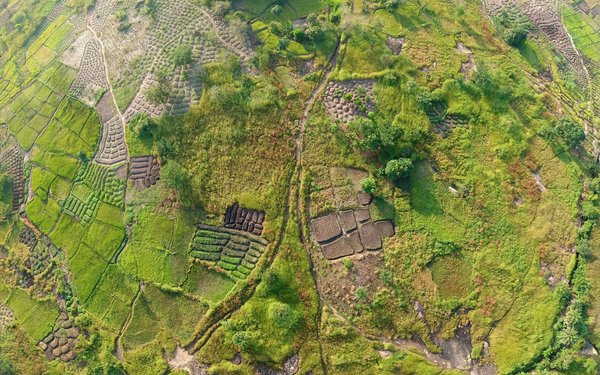
DWD Temperature Explorer: An Open-Access R Shiny Dashboard for Visualizing Historical Climate Data Across Germany
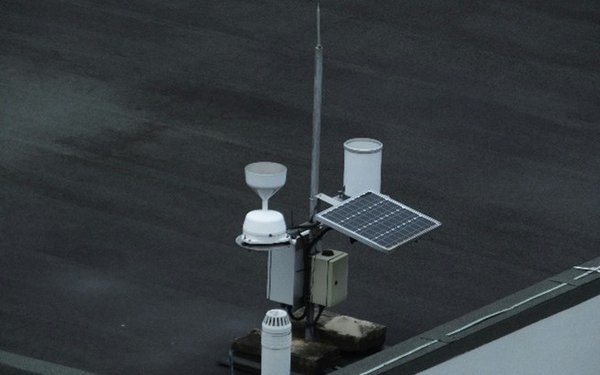
DWD Temperature Explorer: An Open-Access R Shiny Dashboard for Visualizing Historical Climate Data Across Germany

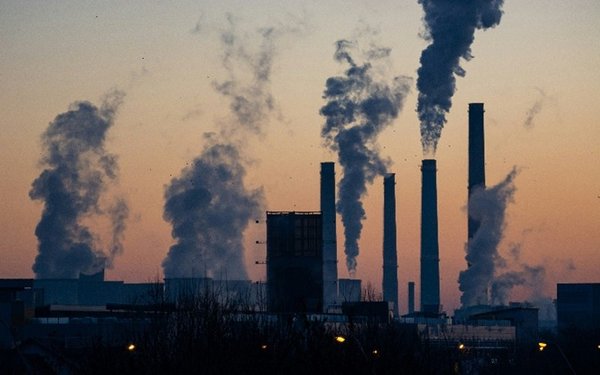
Sentinel-5P Coordinate Explorer: A Web Application for Visualizing Monthly Air Pollution Around Any Location Using Google Earth Engine
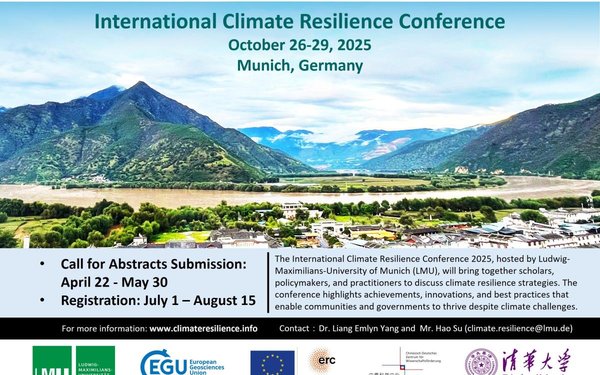
International Climate Resilience Conference (iCARE) 2025
The research group for Climate Resilience of Humanmade Ecosystems made a significant contribution to the International Climate Resilience Conference (iCARE)2025. During the event, Dr. César ?lvarez and Dr. Harison Kipkulei presented important research findings on the effects of climate change and strategies for strengthening resilience among smallholder farmers in the Global South.
@Hao Su, Yao Gao
?
?
?
Contact
Postal address
Centre for Climate Resilience
University Augsburg
Universit?tsstra?e 2
86159 Augsburg
?
Adress of the Chair
Centre for Climate Resilience
Chair for Climate Resilience of Human Made Ecosystems
University Augsburg
Universit?tsstra?e 12a
86159 Augsburg
?
