

Urban greenery in: health booster or pollen trap?
How urban planning, environmental factors and digital applications work together to better understand allergies and reduce symptoms
Urban greenery is good for individual health and the inner-city climate. For allergy sufferers, however, it can be a burden. Researchers at the Chair of Environmental Medicine at the University of Augsburg are investigating how urban vegetation affects allergies. They are co-authors of an international guideline on health-promoting urban planning and have created a high-resolution map of allergen hotspots in Augsburg, a city with 300.000 inhabitants in South Germany. The chair also developed the pollen warning app PollDi, which is now freely available and usable after a test phase in Augsburg and Bad Hindelang. As soon as winter draws to a close, allergy sufferers begin to experience the first symptoms. Hazel and alder pollen are already in the air. Hazel bushes are particularly common in Central European inner-city parks and as hedges. Researchers at the University of Augsburg's Institute of Environmental Medicine and Integrative Health are investigating how urban green spaces affect health and when they become a burden for allergy sufferers. While international guidelines assess the health significance of urban green spaces in general, a second study using Augsburg as an example shows how allergen exposure is distributed within a city. "Our work shows how environmental medicine, urban research and digital health applications can interact at every level, from international guidelines to local risk analyses to individual support via apps," explains Dr Claudia Traidl-Hoffmann, Professor of Environmental Medicine and chair holder. New guidelines from the European Academy of Allergy and Clinical Immunology (EAACI) were recently published in the journal Allergy, with contributions from Augsburg. The recommendations summarize the current state of research on the importance of green spaces in urban areas for the prevention of allergies and asthma. The key message is that urban green spaces are fundamentally valuable from a health perspective, as they promote biodiversity, support mental health and can have a positive effect on the immune system. At the same time, however, their specific design is crucial. Species composition, maintenance, location conditions and climatic factors determine whether green spaces contribute to relief or increase allergen exposure. The guideline therefore advocates health-oriented urban planning that combines ecological and allergological aspects and focuses on biodiversity. A second study by the Chair of Environmental Medicine, published in the journal Sustainable Cities and Society, shows how complex these relationships are in detail. In it, researchers developed a method for high-resolution, spatiotemporal mapping of allergen exposure in cities. Using Augsburg as an example, they identified so-called "allergen hotspots", i.e. areas of the city where exposure to certain types of pollen is particularly high. The analysis shows that allergen exposure is not evenly distributed, but depends heavily on vegetation structure, biodiversity, air pollution and microclimate. Significant differences can occur even within a few hundred metres. Together, both studies show that the question is not whether urban green spaces are healthy, but how they are designed. While the international guideline provides the strategic framework, the Augsburg hotspot analysis provides a practical tool for identifying and minimising local risks in a targeted manner. In this way, the researchers combine basic knowledge with concrete applicability for local authorities, urban planning and healthcare. A direct example of the application of Augsburg's research is the PollDi app, also developed at the Chair of Environmental Medicine at the Faculty of Medicine. The app was tested in a clinical study and is now freely available for the cities of Augsburg and Bad Hindelang. PollDi combines pollen and air quality forecasts with a digital symptom diary. Users can document their symptoms and relate them to environmental factors. "The key is prediction: PollDi makes environmental factors and symptoms visible at an early stage and supports allergy patients in their everyday lives. In my work as a treating physician at the University Outpatient Clinic for Environmental Medicine, I see every day how valuable such evidence-based tools are," says Traidl-Hoffmann.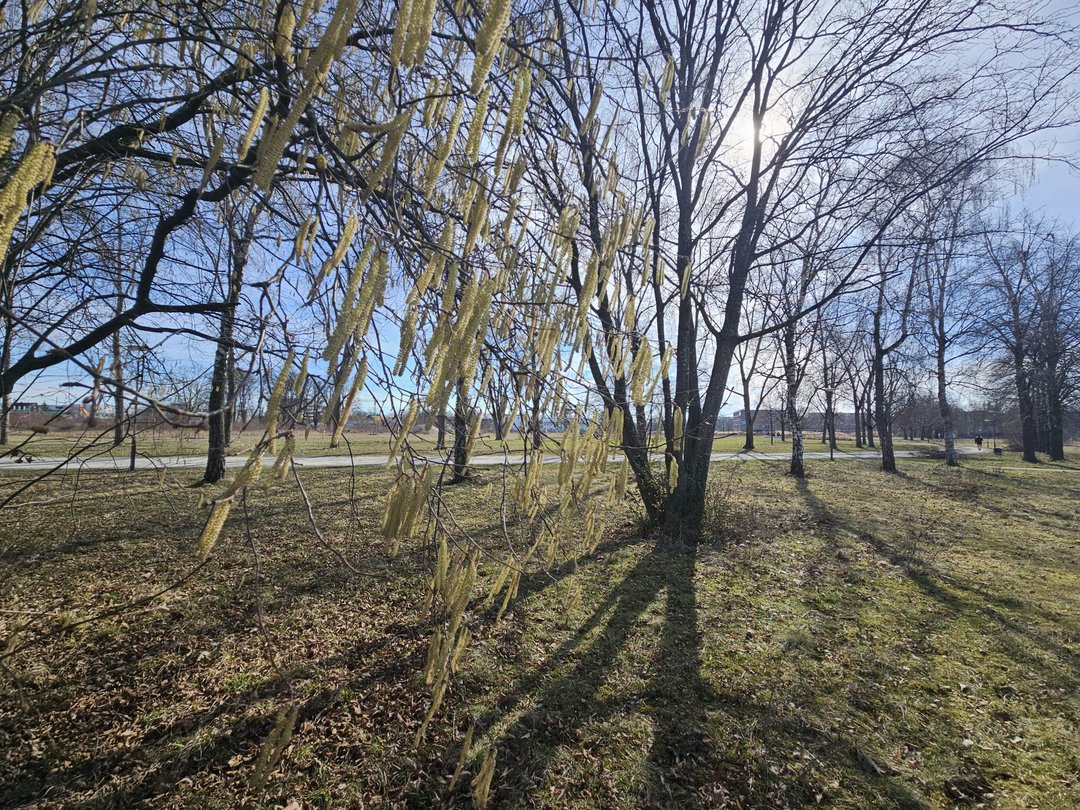
Green spaces as a health factor – international perspective
Local perspective: Where are the allergen hotspots?
Two levels – one goal
PollDi app now freely available
Further information
?EAACI Guidelines on the Importance of Green Space in Urban Environments for Allergy and Asthma Prevention“. Tari Haahtela, Liam O'Mahony, Claudia Traidl-Hoffmann, Mubeccel Akdis, Ozlem Ceylan, Panagiotis Chaslaridis, Athanasios Damialis, Stefano Del Giacco, Antti Lauerma et.al.. Allergy.?https://doi.org/10.1111/all.70182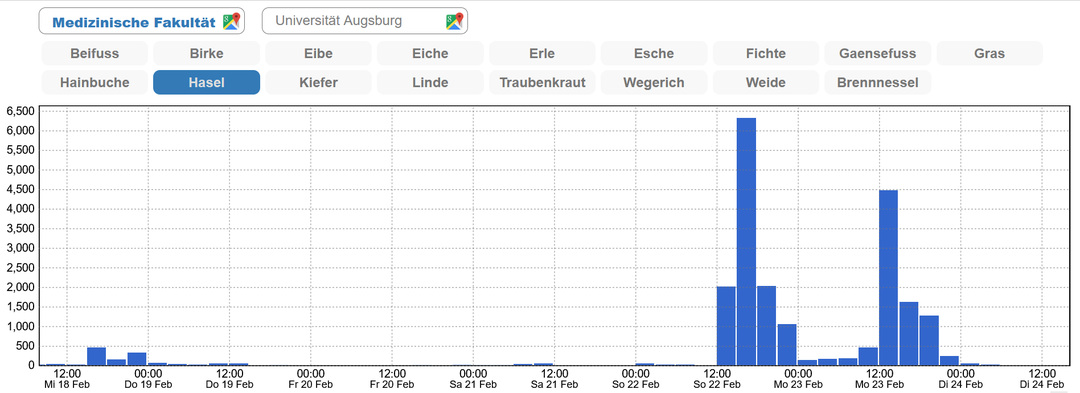
Scientific contact
Media contact